A single earth fault on one pole of the circuit, thanks to separation, does not cause electrocution. If a second earth fault occurs on the other pole, the protection against indirect contacts achieved through separation would become ineffective. No point of the circuit should in fact be considered grounded within a certain extent of the installation itself.
Earth faults in a separated circuit
To limit the risk of earth faults in the separated circuit, particular attention must be paid to insulation to earth, especially regarding flexible trailing cables.
To verify the good condition of the insulation, it is recommended that cables be visible (or at least inspectable) along their entire length, particularly at points where they are most likely to suffer mechanical damage.
For separated circuits, an insulation monitoring device is not considered necessary, as the probability of a first earth fault occurring in installations of modest extent is deemed negligible (the exposed conductive parts are insulated from earth and therefore the fault could not be detected).
A single fault to an exposed conductive part is not enough
Under the previously established conditions, a first fault to an exposed conductive part on a piece of equipment could persist indefinitely without any consequences.
Beware of multiple faults
However, if another earth fault occurs on a second piece of equipment, a person in contact with both pieces of equipment would be subjected to the passage of a certainly dangerous current.
Precautions against double faults
To address the safety issue just highlighted, the exposed conductive parts must be connected in equipotential bonding (excluding Class II appliances, in which any metal enclosure must not be connected to the equipotential conductor). The equipotential conductor transforms the double fault into a short circuit that is detected and interrupted by overcurrent protections. However, to ensure safety, the tripping times of the protections must be verified, which coincide with those specified for TN systems (CEI 64-8 art. 413.5.3.4). For example, for a Un of 230 V, in final circuits, 0.4 s under normal conditions and 0.2 s under particular conditions.
Grounding, associated risks
In circuits protected by electrical separation, intentional grounding of equipment is unnecessary and in some cases can even increase the danger.
The earthing system, shared with other equipment connected to the supply network, can in fact introduce dangerous voltages on the exposed conductive parts.
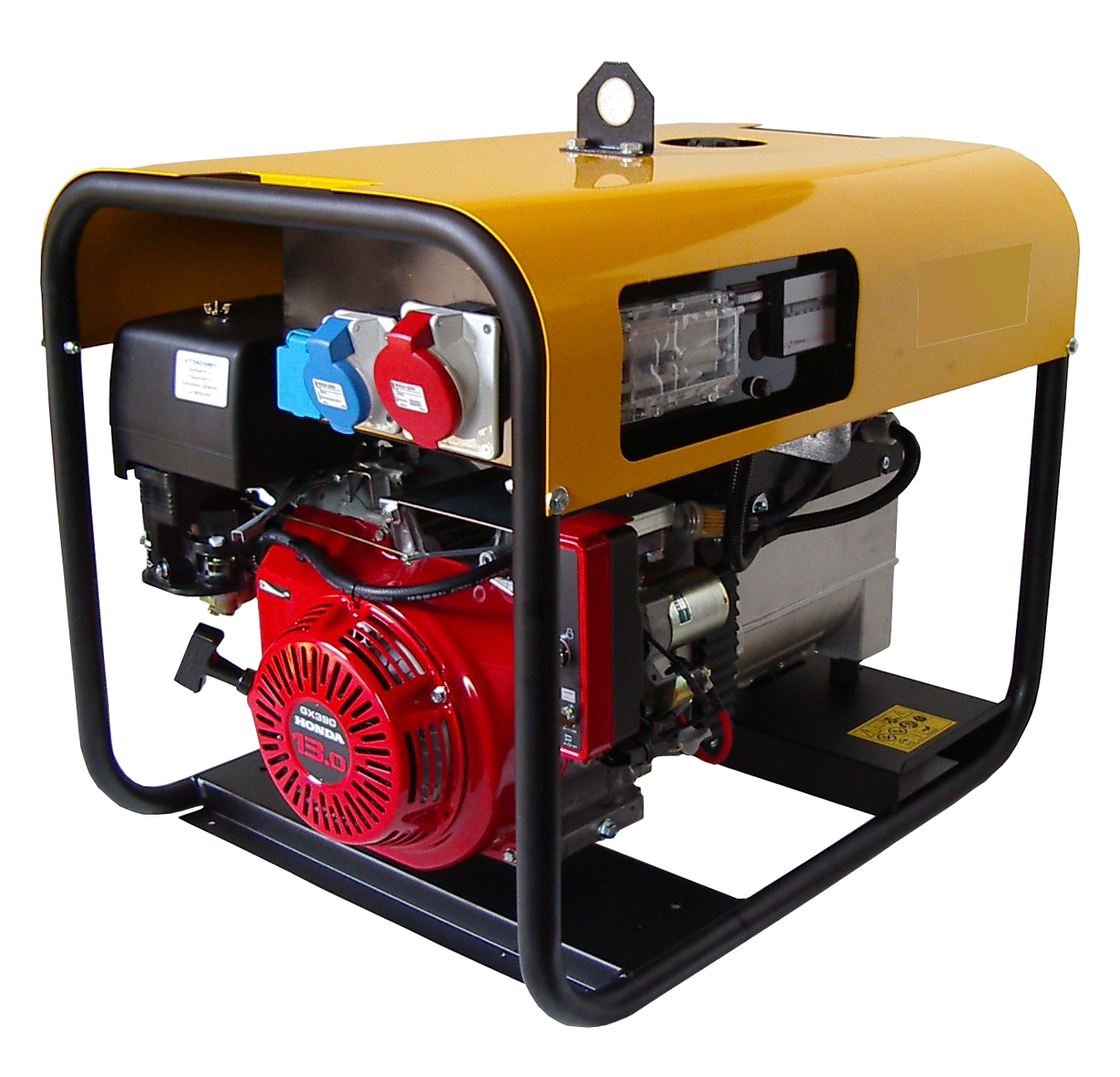
If the generator set has socket outlets, the earth pin must be connected to the body of the generator set itself so that Class I appliances are connected to the equipotential bonding system.
As mentioned, intentional grounding in circuits protected by electrical separation is unnecessary and even inadvisable for safety purposes.